


Yes, Mikumi National Park is generally safe for visitors. However, it is important to follow safety guidelines and listen to your guide’s instructions to ensure a safe and enjoyable experience.
Yes, Mikumi National Park is generally safe for visitors. However, following safety guidelines and listening to your guide’s instructions are important to ensure a safe and enjoyable experience.
There are several activities that visitors can enjoy in Mikumi National Park, including:
- Game drives: Visitors can take game drives to explore the park and see its wildlife. Morning and evening game drives are particularly popular as animals are more active during these times.
- Walking safaris: Visitors can take guided walking safaris to get close to the park’s flora and fauna. These safaris are led by experienced rangers who provide information about the park’s ecosystem.
- Birdwatching: Mikumi National Park is a birdwatcher’s paradise, with over 400 bird species. Visitors can go on guided birdwatching tours or observe birds on their own.
- Photography: Mikumi National Park offers excellent opportunities for photography with its stunning landscapes and diverse wildlife.
- Cultural tours: Visitors can also take cultural tours to nearby villages to learn about the local culture and traditions.
Mikumi National Park is home to a diverse range of wildlife. Visitors can witness large herds of elephants, giraffes, zebras, wildebeests, and buffalos.
Other animals residing in the park include lions, leopards, hyenas, and wild dogs. This beautiful park is also a birdwatcher’s paradise, with over 400 bird species, including the yellow-billed stork, bateleur, and fish eagle.
Furthermore, Mikumi National Park is known for its sable antelopes, greater kudus, and hippos. The park’s wildlife can be seen during game drives, walking safaris, and from designated viewpoints.
The Tanzanian dry season usually starts at the start of June and continues through until the end of October. After that, the ‘short rains’ begin from late October/early November until mid- to end December. There is then a respite from late December to Mid of March, and then the ‘long rains’ start at the end of March and last until May.
Of course, weather seasons can vary every year, so you have to be prepared for anything.
A handful of quick tips on using your smartphone and camera in Tanzania …
1. Using your mobile phone
You won’t find an official store to purchase your mobile service. Instead, there are makeshift stands. The individual you purchase from will ask to see your identification; they’ll then take a photo of it on their phone and send it to the company. You then wait to receive an approval text.
Airtel and Vodacom are two popular mobile phone companies that have reliable service throughout the country. To give you an idea of price, an Airtel SIM card with 12 GB on the 4G network for 30 days cost 40,000 TSh in 2019.
Most establishments have free Wi-Fi, though sometimes this is only available in the communal area, not your room. And when the Wi-Fi stops working, it can take days before it’s fixed if you’re somewhere rural.
2. Be wary of prohibited photography
Tanzania has many fantastic photo opportunities, but you’re strictly prohibited from shooting snaps of military installations and personnel, hospitals, schools, bridges, industrial sites, and airports. Before you click, ensure there’s nothing in the photograph that could get you into trouble with the authorities.
Also, when travelling remotely, please be sensitive to the people and their culture. The most remote of the Maasai communities in the north, for instance, aren’t familiar with photos and you should always request permission before taking a photo of them.
3. Check if you should bring an adapter
Northern Tanzania uses plug type G, as shown below, and the standard voltage is 230 V. You may need to bring along an international adapter to use any appliances and gadgets you’ve brought with you from home. (Don’t expect to find a hairdryer in your room as you might be used to in other countries – if this is a must for you, please travel with your own.)
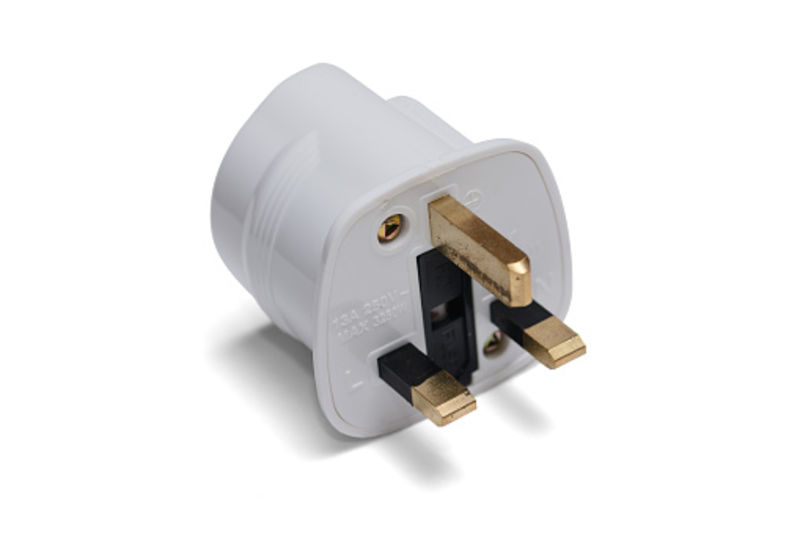
Plug type G
Tanzania is mapped by the World Health Organization as a low risk country because no Yellow fever virus has been isolated in the country. However, the abundance of Yellow fever vector and other favorable ecological conditions pose potential risk for Yellow fever if the virus is introduced into the country. Furthermore, being bordered with Yellow fever endemic countries has also increased the vulnerability of Tanzania being infected with the virus.
In order to conform to IHR, 2005 requirements and safeguard public health security in Tanzania, Yellow fever vaccination is mandatory to travellers arriving from Yellow fever endemic countries. This condition also applies to travellers subjected to long flight connection (transit) in Yellow fever endemic country for twelve hours (12hrs) or more.
Overall, Tanzania is a safe, hassle-free country.
That said, you should, of course, take the usual precautions. We’re talking avoiding isolated areas, like empty stretches of beach. If you plan to go strolling along the beachfront, away from security, leave your valuables, money and cellphone in your hotel room. To capture the stunning views, bring along a cheap camera. That way, if something happens to it, you aren’t devastated by the loss.
Note that in certain areas hawkers can be persistent to the point of making you feel a little harassed. But they don’t actually pose any danger.
Be wary of ‘flycatchers’
Also watch out for the ‘flycatchers’. These are men that act like they’re your new best friend, ready to save the day. The flycatcher’s goal is to bring you to excursion companies, so that hopefully they’ll be hired permanently by the company (and maybe receive a tip from you too).
These men usually operate in a group. If you say no, they will follow you. When they see another opportunity, a partner will approach you. Of course there are honest and dishonest flycatchers, and it’s difficult to know which is which, especially as a foreigner. If you’re travelling with a tour guide, you can just defer to them, and they’ll look after you.
Dress and behave appropriately for Tanzania
Other considerations should be public display of affection and suitable clothing. If you’re coming with your significant other, please be aware that public display of affection is not acceptable outside of the hotel; homosexuality is illegal and is punishable by a harsh prison sentence.
Women should avoid wearing above-the-knee shorts and shirts that display the collarbone and shoulders in public, unless you’re on Zanzibar or at a private beach. The exception to this rule is on safari and trekking Mt Kilimanjaro, where it’s acceptable.
Respecting the local culture and its customs makes you a thoughtful traveller.
The three international airports in Tanzania are in Dar es Salaam, Arusha and Zanzibar. There are many other airports, as well as airstrips, that one can use for travel within Tanzania.
Julius Nyerere International Airport (DAR) in Dar es Salaam
This airport is on the east coast. It’s the biggest airport and you may need to fly here and then catch a connection to one of the smaller ones. This airport makes the most sense if you’re heading to west, central or southern Tanzania.
Kilimanjaro International Airport (JRO) near Arusha
JRO is just outside of Arusha, the main city of northern Tanzania. This is the ideal airport if you’re heading on a Northern Circuit safari or a Kilimanjaro climb. As you can see in the map below, it’s very close to Moshi, the closest town to Kilimanjaro National Park.
JRO is also the closest major airport to the large game reserves of the north like Serengeti National Park. That said, Tanzania is a big country and it will take a day to drive from JRO to the Serengeti, for instance, especially as much of the drive is on dirt roads that require four-wheel drive. You might like to consider flying to one of the various airstrips across northern Tanzania to reduce travel times.
Zanzibar Abeid Amani Karume Airport (ZNZ) in Zanzibar
If you’re heading to the Zanzibar archipelago, then you want to fly into ZNZ on Unguja Island. If you’re heading to Zanzibar from elsewhere in Tanzania, then you could also use Pemba Airport (PMA) depending on your planned itinerary.
Zanzibar is famous for its beautiful, warm-water beaches, unique cultural history, beautiful game parks and wildlife, and water sports. We find that many like to fly there from Kilimanjaro International Airport after having completed a Kili climb in order to relax and unwind after their epic trek.
Fly into Kenya and drive south
Note that you could also choose to fly into Jomo Kenyatta International Airport (NBO) in Nairobi, Kenya, and then drive southwards for 800 km to reach the Tanzania border. This works well for those wanting to visit both Kenya and Tanzania.
Note that if you’re going to visit more than one nation in the region, you’ll probably want to obtain an East African visa over just a Tanzanian visa.
There are a number of ways to get around town in Tanzania. The primary ways of navigating the cities are:
- dala-dala (small local bus)
- tuk-tuk
- boda-boda (motorcycle taxi)
The dala-dala is the least expensive way to travel around town – it will cost you around 500 TSh ($0.22). But be aware that you may be sharing the ride with non-caged live chickens under the backseat. It’s also important to make sure you have the exact amount, or give a small bill, as you likely won’t get change. Hiring a tuk-tuk or boda-boda will cost you about 4,000 TSh ($1.70) for the same distance as the dala-dala.
Travelling by bus throughout the country is not scary and it’s a fantastic way to see the countryside. It’s an 11-hour road trip from Dar es Salaam, the capital city, to Arusha in the north. This includes a 30-minute lunch stop. The cost is a mere 36,000 TSh ($15.50).
Note that if you travel with a tour operator, you’ll be driven around in private vehicles throughout your trip.
Certain establishments close to airports often offer free airport transfers.
There are no mandatory vaccinations for entering Tanzania. The only exception is proof of a yellow fever vaccination if you’re coming from a country with a known yellow fever epidemic.
That said, to ensure your health whilst travelling abroad you should have the following vaccinations: typhoid, TDP, varicella (unless you’ve had chicken pox), and Hepatitis A and B. If you’re an adventurous eater, you might want to add cholera to the list.
Tanzania is in a malaria zone, as shown in the map below. That said, malaria isn’t an issue in all parts of the country. But you might want to consider using anti-malaria medication. If so, please order enough to be able to continue taking them seven days after returning home.
All good accommodations where mosquitoes are an issue provide you with netting around your bed.
Finally, your doctor may recommend a rabies shot – a series of two doses over a four-week period – if you plan on caving or working with animals.
Insect repellent and sunscreen
Please bring enough insect repellent and sunscreen for the trip. You’re heading to a country just south of the Equator, and so it can get very hot. It’s not easy to find insect repellent and sunscreen in Tanzania and, when you do, they’re pricey.
Whilst on safari, you need to protect yourself from tsetse flies. These flies can transmit African trypanosomiasis, also known as sleeping sickness. It’s best to wear light-colour clothing; tsetse flies are attracted to dark colours, especially shades of blue. Unfortunately products containing DEET usually don’t discourage tsetse flies from biting, so try to find a natural insect repellent containing eucalyptus oil.


